
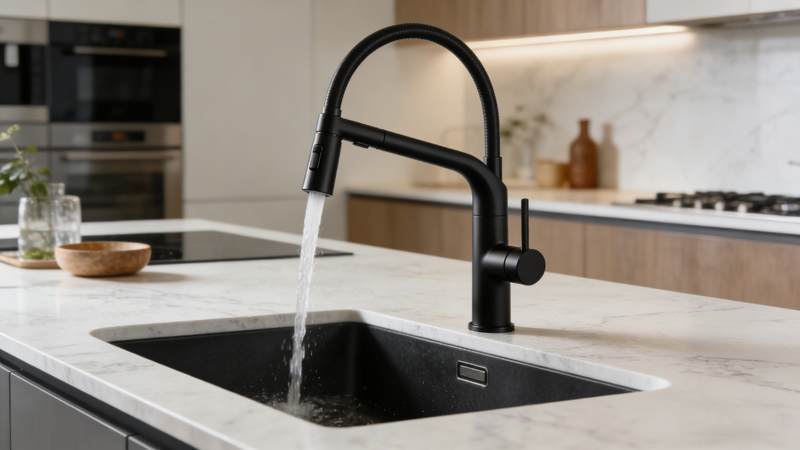
The kitchen has firmly established itself as the heart of the modern home, and in 2026, the kitchen faucet is no longer just a functional fixture—it’s a design statement, a smart appliance, and a sustainability tool all in one. As lifestyles evolve and homeowners demand more from their kitchens, faucet trends are shifting toward smarter technology, refined aesthetics, and eco-conscious innovation.
Whether you’re planning a remodel, specifying products for a project, or simply staying ahead of industry trends, here’s a comprehensive look at the top kitchen faucet trends shaping 2026.
1. Smart Faucets Become Truly Intelligent
Smart faucets have moved beyond novelty status in 2026. While early smart models focused mainly on touchless activation, today’s faucets integrate advanced sensors, voice assistants, and app connectivity.
Homeowners can now:
- Dispense precise water amounts via voice commands
- Set temperature presets
- Monitor water usage in real time
- Receive alerts for leaks or abnormal flow
Integration with smart home ecosystems like Alexa, Google Home, and Apple HomeKit is now expected rather than optional. These features not only improve convenience but also support water conservation—a growing priority worldwide.
2. Touchless Technology Goes Mainstream
Once associated mainly with commercial kitchens and public restrooms, touchless kitchen faucets are now standard in residential spaces. Improved sensor accuracy in 2026 means fewer false activations and more reliable performance.
Hygiene remains a major driver. Touchless operation reduces cross-contamination during food prep, making it especially popular in households with children or frequent cooking routines. Many models also combine touchless and manual modes, giving users flexibility without sacrificing reliability.
3. Minimalist Design with Architectural Influence
In terms of aesthetics, 2026 kitchen faucet design leans heavily toward clean lines, sculptural forms, and understated elegance. Visual clutter is out; refined silhouettes inspired by modern architecture are in.
Popular design elements include:
- Slim, elongated spouts
- Cylindrical or squared bodies
- Seamless handle integration
- Hidden or low-profile spray buttons
Rather than overpowering the kitchen, faucets now complement cabinetry, countertops, and backsplashes, creating a cohesive and intentional design language.
4. Matte Finishes Continue—But With Refinement
Matte black remains popular in 2026, but it has evolved. Manufacturers are focusing on scratch-resistant coatings, fingerprint resistance, and warmer undertones to address earlier durability concerns.
Beyond matte black, trending finishes include:
- Brushed gold and champagne bronze
- Soft brushed nickel
- Gunmetal and dark stainless
- Two-tone combinations (e.g., black with brass accents)
Mixed finishes are especially popular in contemporary and transitional kitchens, allowing faucets to coordinate with both appliances and hardware without appearing overly matched.
5. Sustainability Drives Innovation
Sustainability is no longer a marketing add-on—it’s a core design requirement. In 2026, kitchen faucets are engineered to reduce water waste without compromising performance.
Key sustainability trends include:
- Lower flow rates with improved aeration
- Cold-start technology to reduce energy use
- Lead-free and low-impact materials
- Long-life ceramic cartridges to reduce replacements
Many homeowners actively seek faucets that meet or exceed international water efficiency standards, making eco-friendly certifications a major purchasing factor.
6. Pull-Down and Pull-Out Faucets Dominate
Pull-down faucets continue to lead the market in 2026 due to their versatility and ergonomic design. Improved hose materials and magnetic docking systems ensure smoother operation and longer lifespan.
Pull-out models still hold appeal for compact kitchens and bar sinks, but overall, consumers prefer the professional-style pull-down format for its balance of form and function. Multi-spray options—such as stream, spray, and pause—are now standard expectations rather than premium upgrades.
7. Commercial-Inspired Features for Home Kitchens
Professional kitchens continue to influence residential design. In 2026, many homeowners want faucets that look and perform like commercial-grade equipment—without the industrial bulk.
Common features include:
- High-arc or spring spouts
- Powerful pre-rinse spray modes
- Heat-resistant hoses
- Robust metal construction
These faucets appeal to serious home cooks while still fitting seamlessly into modern kitchen aesthetics.
8. Customization and Modularity on the Rise
Customization is becoming a defining trend. More brands now offer modular faucet systems that allow buyers to choose:
- Spout height and shape
- Handle style
- Finish combinations
- Optional accessories like soap dispensers or filtered water taps
This flexibility is particularly valuable in high-end projects and new builds, where designers aim for a unique, tailored look rather than off-the-shelf solutions.
9. Easy Installation and Maintenance Matter More Than Ever
With rising labor costs, ease of installation is a growing concern. In 2026, many kitchen faucets are designed with:
- Tool-free installation systems
- Quick-connect hoses
- Universal mounting compatibility
Maintenance-friendly designs—such as removable aerators and accessible cartridges—also influence buying decisions, especially for property managers and rental properties.
10. Timeless Over Trendy
Perhaps the most important shift in 2026 is the move away from short-lived trends. Homeowners increasingly prefer timeless faucet designs that will age gracefully rather than feel dated in a few years.
Neutral finishes, balanced proportions, and durable materials are favored over bold but fleeting design statements. The goal is longevity—both visually and functionally.
Final Thoughts
Kitchen faucet trends in 2026 reflect broader changes in how we live, cook, and think about sustainability. Faucets are smarter, more refined, and more responsible than ever before. They balance cutting-edge technology with timeless design, offering convenience without sacrificing durability or environmental awareness.
For homeowners, designers, and industry professionals alike, investing in the right kitchen faucet in 2026 means choosing a product that performs beautifully today—and remains relevant for years to come.